Overview
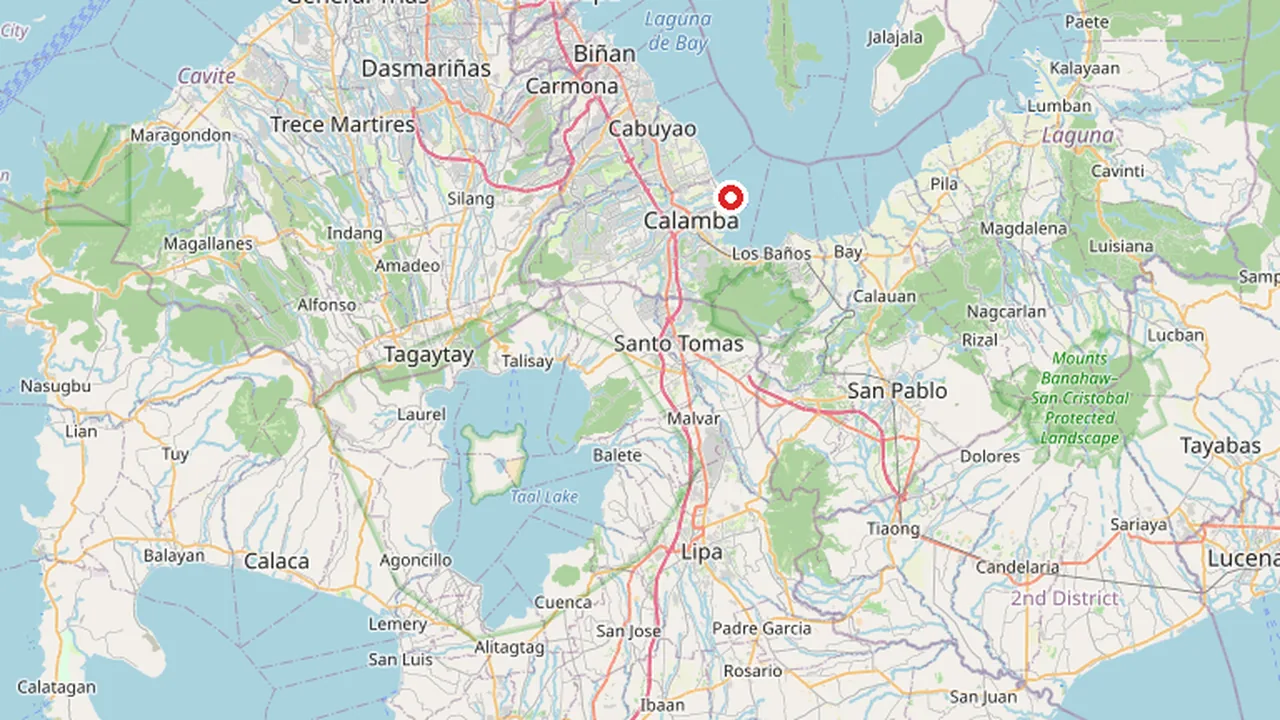
The San Juan River, frequently referred to as the Calamba River, is a significant watercourse located within the municipality of Calamba in the province of Laguna, Philippines. Situated on the island of Luzon, this river system serves as one of the 21 major tributaries feeding into Laguna de Bay, the largest lake in the country. The river plays a crucial role in the local hydrology of Calamba, contributing to the water balance and ecological dynamics of the broader Laguna Lake basin. Its dual nomenclature reflects both its geographic association with the city of Calamba and its specific local identity as the San Juan River, a distinction recognized in regional geographical records and municipal planning documents.
As an active water body, the San Juan River is under the jurisdictional and monitoring purview of the Laguna Lake Development Authority (LLDA). The LLDA, the primary governing body responsible for the management and development of the Laguna de Bay watershed, actively monitors the river's condition. The San Juan River is specifically tracked through one of the LLDA’s 15 designated river monitoring stations, ensuring that water quality, flow rates, and sediment loads are regularly assessed. This systematic monitoring is essential for maintaining the health of the tributary and, by extension, the larger Laguna de Bay ecosystem. The data collected from these stations informs environmental policies, flood control measures, and urban development strategies in Calamba and surrounding areas.
The river's status as a major tributary underscores its importance in the regional water network. Laguna de Bay is a vital resource for millions of residents in the Calabarzon region, providing freshwater for agriculture, industry, and domestic use. The San Juan River's contribution to this system is therefore integral to the water security of the area. The ongoing monitoring by the LLDA highlights the continuous effort to manage the river's environmental health amidst urbanization and agricultural activities in Calamba. This oversight helps mitigate potential pollution and ensures that the river remains a functional and vital component of the Laguna Lake watershed.
Basin Geography and Hydrology
The San Juan River, also known as the Calamba River, functions as a vital hydrological component within the broader Laguna de Bay watershed system. Located in the municipality of Calamba in the province of Laguna, this river serves as one of the 21 major tributaries that feed into Laguna de Bay, the largest lake in the Philippines. Its status as a primary inflow is significant for the hydrological balance of the lake, influencing water levels, sediment transport, and overall water quality for the surrounding regions. The river system is actively managed and monitored by the Laguna Lake Development Authority (LLDA), which oversees the basin’s health through a network of observation points.
Watershed Extent and Municipal Coverage
The watershed area of the San Juan River extends beyond the municipal boundaries of Calamba, encompassing territories in the neighboring province of Batangas. Specifically, the drainage basin includes the municipalities of Santo Tomas, Tanauan, and Malvar in Batangas. This cross-provincial reach highlights the river's role as a shared natural resource, where upstream activities in Batangas directly impact the flow and condition of the water as it moves through Calamba and eventually discharges into Laguna de Bay. The geographical span from the highlands of Batangas to the lowlands of Laguna creates a diverse topographical profile that influences the river's flow dynamics.
Monitoring and Management
To ensure effective management of this critical waterway, the Laguna Lake Development Authority (LLDA) has established a dedicated monitoring station along the San Juan River. This station is one of the 15 river monitoring stations deployed by the LLDA across the Laguna de Bay basin. These stations are instrumental in tracking key hydrological and water quality parameters, providing data that informs flood control measures, pollution management, and ecological preservation efforts. The regular monitoring allows authorities to respond to seasonal variations and anthropogenic pressures, ensuring that the San Juan River continues to function effectively as a major tributary supporting the ecological and economic needs of the Laguna de Bay region.
Monitoring and Conservation Efforts
The San Juan River, recognized as one of the 21 major tributaries of Laguna de Bay, is under the active jurisdiction of the Laguna Lake Development Authority (LLDA). This governing body is responsible for the comprehensive management and monitoring of the river system within Calamba, Laguna. The LLDA ensures that the water quality and flow of the San Juan River are regularly assessed to maintain the ecological balance of the larger Laguna de Bay basin. The authority's oversight is critical for a river system that serves as a vital hydrological component in the region.
LLDA Monitoring Stations
The LLDA employs a structured network of 15 river monitoring stations to track the health of the tributaries feeding into Laguna de Bay. The San Juan River is specifically monitored through one of these designated stations. This systematic approach allows the authority to collect consistent data on water quality parameters, sediment load, and flow rates. By integrating the San Juan River into this network of 15 stations, the LLDA can compare its condition against other major tributaries. This comparative analysis helps in identifying pollution sources and assessing the overall impact of urban and agricultural runoff from Calamba and surrounding areas.
Collaborative Conservation Initiatives
Beyond the primary oversight of the LLDA, conservation efforts for the San Juan River involve collaboration with local and regional bodies. The MTSC-San Juan River Protection Foundation, Inc. plays a significant role in grassroots and organizational initiatives aimed at preserving the river's integrity. This foundation works in tandem with the Laguna de Bay River Basin Councils to implement targeted protection measures. These councils facilitate coordination among various stakeholders, including local government units, environmental agencies, and community groups. Their collective efforts focus on sustainable management practices that address both immediate environmental challenges and long-term ecological health for the San Juan River and the broader Laguna de Bay ecosystem.
Why it matters
The San Juan River holds a distinct position within the hydrological framework of Calamba, Laguna, serving as one of the two major rivers that drain the municipality into Laguna de Bay. This dual-river system is critical for the local watershed management, as it facilitates the flow of surface water from the urban and agricultural landscapes of Calamba toward the largest lake in the Philippines. As one of the 21 major tributaries feeding Laguna de Bay, the San Juan River plays a vital role in regulating water levels and maintaining the ecological balance of the lake basin. Its contribution to the lake's hydrology is not merely volumetric but also qualitative, as it transports sediments, nutrients, and dissolved oxygen that influence the broader aquatic ecosystem.
Ecological Significance
The ecological importance of the San Juan River is tied directly to its status as a key tributary of Laguna de Bay. The river acts as a conduit for biodiversity, supporting various aquatic species that migrate between the riverine and lacustrine environments. The health of the river directly impacts the water quality of the lake, particularly in the Calamba sector of Laguna de Bay. Pollutants, organic matter, and sediment loads carried by the river can affect the clarity, oxygen levels, and biological productivity of the lake. Therefore, the river serves as a natural filtration and transport system, where the condition of its banks and water column reflects the environmental pressures exerted by the surrounding municipality. The interplay between the river and the lake creates a dynamic ecosystem that supports fish populations, wetland vegetation, and bird species that rely on the transitional zones between freshwater and lake environments.
Hydrological Monitoring and Management
The hydrological significance of the San Juan River is formally recognized through the monitoring efforts of the Laguna Lake Development Authority (LLDA). The LLDA, the governing body responsible for the integrated development and management of the Laguna de Bay watershed, includes the San Juan River in its network of 15 river monitoring stations. This regular monitoring is essential for tracking water quality parameters, flow rates, and seasonal variations that affect both the river and the lake. The data collected from these stations inform flood control measures, water resource allocation, and pollution mitigation strategies. By treating the San Juan River as a critical component of the larger lake system, the LLDA ensures that management decisions account for the river's contribution to the overall health of Laguna de Bay. This systematic approach highlights the river's role not just as a local waterway, but as a strategic element in the regional water management infrastructure of Laguna.
What is the impact of water quality on local usage?
The San Juan River’s water quality classification has direct implications for the communities and economic activities along its banks in Calamba, Laguna. According to the Laguna Lake Development Authority (LLDA), the river is one of 21 major tributaries of Laguna de Bay and is regularly monitored through one of the agency’s 15 river monitoring stations. The LLDA’s monitoring data is critical for understanding how the river’s condition affects local usage, particularly given the varying water quality standards set by the Department of Environment and Natural Resources (DENR).
Water Quality Classifications and Local Impact
The DENR classifies water bodies into different categories, with Class D often representing water suitable for irrigation, industrial cooling, and navigation. When the San Juan River is classified as "worse than Class D," it indicates that the water quality may not consistently meet the standards required for these uses. This classification can have significant effects on local agriculture, livestock, and industrial water supply.
For agriculture, the San Juan River serves as a vital water source for rice fields and other crops in Calamba. If the water quality deteriorates beyond Class D standards, it can lead to soil degradation, reduced crop yields, and increased reliance on fertilizers and pesticides. Farmers may also face challenges in maintaining the health of their livestock if the river water is used for drinking and bathing, potentially leading to higher veterinary costs and lower productivity.
Industrial water supply is another area affected by the river’s water quality. Many industries in Calamba rely on the San Juan River for cooling processes and other non-potable uses. Poor water quality can result in increased treatment costs, equipment corrosion, and even production downtime. This can have a ripple effect on the local economy, impacting jobs and business growth in the municipality.
Monitoring and Management Efforts
The LLDA plays a crucial role in monitoring and managing the water quality of the San Juan River. Through its 15 river monitoring stations, the agency collects data on various parameters such as dissolved oxygen, biological oxygen demand, and turbidity. This data helps identify trends and pinpoint areas where intervention is needed. The LLDA’s efforts are essential for ensuring that the river remains a reliable water source for the diverse needs of Calamba’s residents and industries.
Despite these efforts, maintaining water quality in the San Juan River remains a challenge. Urbanization, agricultural runoff, and industrial discharge contribute to the river’s pollution. Addressing these issues requires coordinated efforts from local government units, industries, and the community to implement effective waste management and conservation practices. The LLDA’s ongoing monitoring and management are vital for sustaining the river’s health and its contributions to the local economy and environment.
How is the San Juan River monitored?
The San Juan River, recognized locally as the Calamba River, is subject to systematic environmental and hydrological monitoring by the Laguna Lake Development Authority (LLDA). As one of the 21 major tributaries feeding into Laguna de Bay, the river’s health is critical to the broader watershed management strategy for the lake. The LLDA employs a network of dedicated infrastructure to track water quality, flow rates, and sediment loads, ensuring that data-driven decisions can be made regarding flood control, pollution mitigation, and ecological preservation in the Calamba area.
LLDA River Monitoring Stations
The primary mechanism for tracking the river’s condition is the LLDA’s network of river monitoring stations. The San Juan River is actively monitored through one of the 15 designated river monitoring stations established by the authority. These stations serve as fixed points for the collection of real-time and periodic data. The monitoring process involves the regular sampling of water parameters, which allows the LLDA to assess the impact of urban runoff, agricultural discharge, and domestic wastewater from the densely populated municipalities along the riverbanks. The data gathered at these stations are integral to the LLDA’s ability to issue advisories, enforce water quality standards, and coordinate cleanup drives. The presence of a dedicated station on the San Juan River underscores its significance within the Laguna de Bay watershed, distinguishing it from smaller, less frequently measured creeks.
Role of the San Juan River Basin Council
In addition to the technical monitoring conducted by the LLDA, the governance of the San Juan River involves the San Juan River Basin Council. This body plays a crucial role in the administrative and strategic oversight of the river system. The Council facilitates coordination among various local government units, stakeholders, and the LLDA to ensure that monitoring data translates into actionable policy. While the LLDA provides the scientific data through its monitoring stations, the Basin Council helps to contextualize this information within the broader socio-economic landscape of Calamba and its neighboring areas. This collaborative approach ensures that the monitoring efforts are not merely observational but are integrated into the long-term development plans of the region, addressing issues such as land use, infrastructure development, and community engagement in river conservation efforts.
Frequently asked questions
What is the geographical relationship between the San Juan River and Laguna de Bay?
The San Juan River is a significant tributary that flows into Laguna de Bay, the largest lake in the Philippines. Located primarily in Calamba, Laguna, this river plays a crucial role in the hydrological system of the region by channeling water from the surrounding basin into the lake.
Why is water quality monitoring important for the San Juan River?
Monitoring is essential because the river serves as a primary water source for domestic, agricultural, and industrial uses in Calamba. Regular assessment helps identify pollutants and ensures that the water remains safe for local consumption and ecosystem health.
How does the water quality of the San Juan River affect local communities?
Poor water quality can lead to health issues for residents who rely on the river for drinking and bathing. It also impacts agricultural productivity and local fisheries, making consistent quality control vital for the economic stability of the area.
What methods are used to monitor the San Juan River?
Authorities employ various scientific methods, including regular sampling of water for chemical and biological analysis. These efforts often involve government agencies and local organizations that track parameters such as dissolved oxygen, pH levels, and bacterial counts.
What are the main conservation efforts for the San Juan River?
Conservation initiatives focus on reducing pollution sources, such as domestic waste and industrial runoff, through stricter regulations and community engagement. These efforts aim to restore the river's ecological balance and improve its overall water quality for future generations.
See also
- Zapote River: Geography, History and the Battle of Zapote
- Estero de Vitas: Hydrology and Historical Role in Manila
- Estero de Sunog Apog: Hydrology and Historical Geography in Manila
- Molawin River: Hydrology, Conservation and Cultural Significance in Los Baños
- Chico River: Hydrology, Indigenous Heritage and the Dam Resistance